General Description
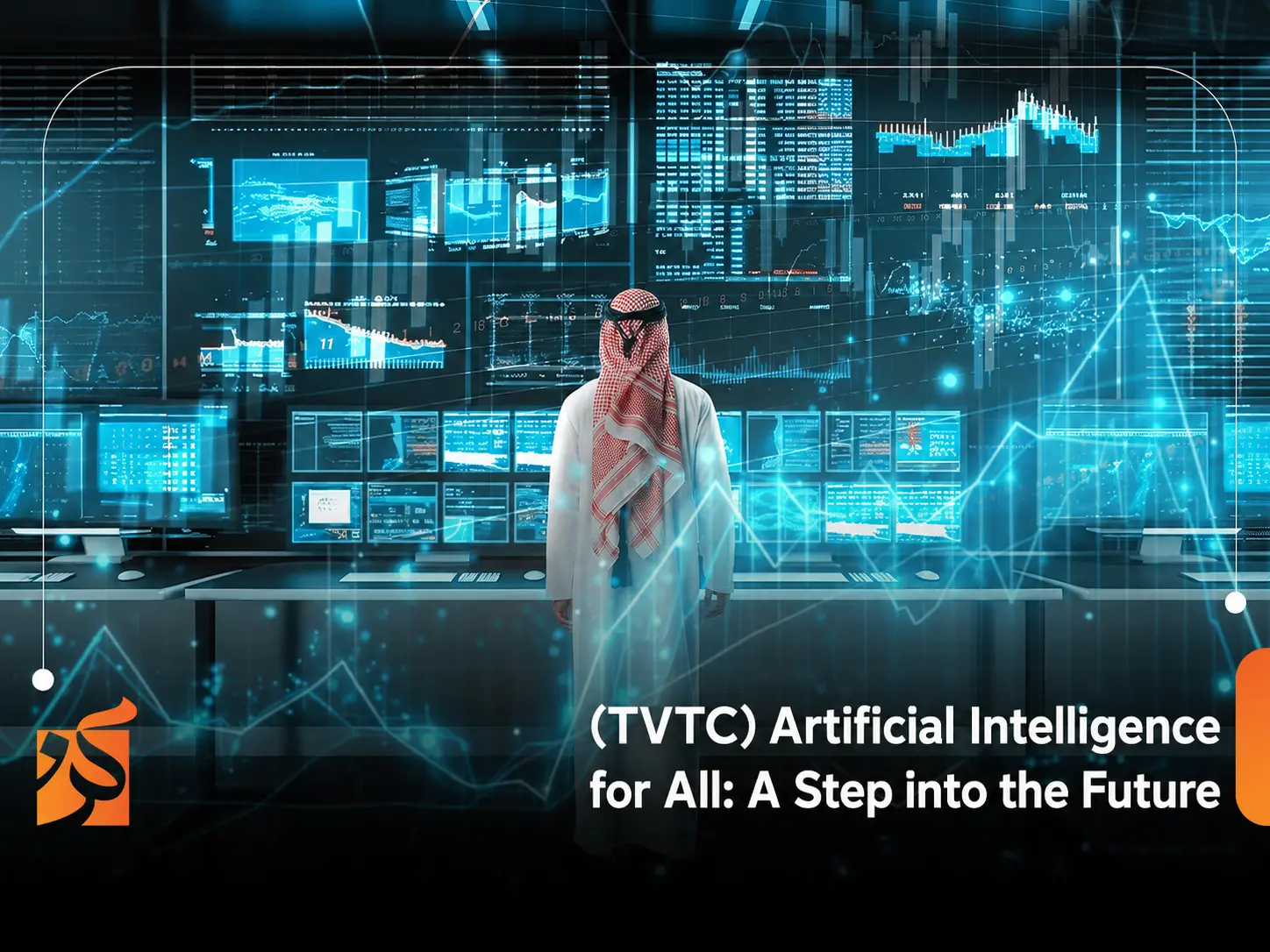
The Introduction to Artificial Intelligence for Everyone: A Step Toward the Future (TVTC) course is a foundational training program designed to simplify the concept of Artificial Intelligence (AI) and make it accessible to all learners. The course introduces the basics of AI, its core technologies, and real-world applications such as machine learning, data analysis, intelligent systems, and automation.
It also helps participants understand the impact of AI on the future of work and daily life, and how these technologies can be used to improve productivity, decision-making, and overall efficiency.
The Goals
- Understand the concept and evolution of Artificial Intelligence.
- Explore key AI applications in daily life.
- Learn the basics of machine learning and data analysis.
- Recognize the impact of AI on the job market.
- Develop digital awareness of emerging technologies.
- Identify commonly used AI tools and platforms.
- Encourage future-oriented technical thinking.
- Promote the responsible use of AI technologies.
Target Auidence
- Beginners in technology and AI.
- Students and future job seekers.
- Employees seeking digital upskilling.
- Entrepreneurs and business owners.
- Individuals interested in digital transformation.
- Anyone interested in understanding AI without technical background.
The Features
- Simplified AI concepts for non-technical learners.
- Modern content aligned with current technological trends.
- Real-life practical examples and use cases.
- Focus on AI’s impact on the future of work.
- Development of digital and technological awareness.
- Interactive and easy-to-understand training approach.
- No prior programming or technical background required.
Topics
Introduction to Artificial Intelligence
- Definition of AI.
- History and evolution of AI.
- Difference between human and artificial intelligence.
AI Applications
- Smart assistants.
- Recommendation systems.
- Self-driving cars.
- Data analysis.
Machine Learning Basics
- Core concept of machine learning.
- How systems learn from data.
- Simple real-world examples.
AI in Everyday Life
- Smartphones and apps.
- Online platforms.
- E-commerce systems.
Future of AI
- Future job trends.
- AI impact on employment.
- Skills needed for the future workforce.
Learning outcomes
By the end of the course, participants will be able to:
- Understand the basics of Artificial Intelligence.
- Identify key AI applications in daily life.
- Recognize AI’s impact on future careers.
- Use basic AI terminology correctly.
- Develop an initial understanding of modern technologies.
- Interact responsibly with AI tools and systems.
Requirements And Conditions
- No prior technical experience required.
- Interest in modern technologies.
- Willingness to learn and develop.
- Ability to follow simplified training content.
FAQs
The Blog
Artificial Intelligence (AI) is no longer a distant or highly specialized concept reserved for scientists and large technology companies. It has become an essential part of modern life, shaping how we work, learn, communicate, and make decisions. From smart assistants on mobile phones to recommendation systems on streaming platforms, AI is deeply integrated into everyday experiences.
The rapid development of digital technologies has made AI one of the most influential forces driving global transformation. It is reshaping industries, redefining job roles, and creating new opportunities that did not exist a few years ago. As a result, understanding AI has become a valuable skill for individuals from all backgrounds—not only for technical professionals but also for students, employees, entrepreneurs, and decision-makers.
The Introduction to Artificial Intelligence for Everyone: A Step Toward the Future (TVTC) course is designed to simplify this complex field and make it accessible to all learners. It provides a clear and practical understanding of AI concepts, applications, and future implications, helping participants build awareness and confidence in navigating the digital world.
What is Artificial Intelligence?
Artificial Intelligence refers to the ability of machines and computer systems to simulate human intelligence. This includes learning from data, recognizing patterns, solving problems, understanding language, and making decisions with minimal human intervention.
AI systems are designed to perform tasks that typically require human intelligence, such as speech recognition, image processing, language translation, and predictive analysis. Over time, these systems improve their performance by learning from large datasets.
This ability to learn and adapt is what makes AI one of the most powerful technologies of the modern era.
The Importance of AI in the Modern World
AI plays a critical role in improving efficiency, productivity, and decision-making across industries. Organizations use AI to analyze large amounts of data, automate repetitive tasks, and enhance customer experiences.
In everyday life, AI helps individuals through navigation apps, voice assistants, personalized content recommendations, and smart devices.
Key benefits of AI include:
- Increased efficiency and automation.
- Improved accuracy in data analysis.
- Enhanced user experiences.
- Faster decision-making processes.
- Innovation in various industries such as healthcare, education, and transportation.
As technology continues to evolve, AI is expected to become even more integrated into daily life and business operations.
How Artificial Intelligence Works
AI systems operate through a combination of algorithms, data processing, and computational models. One of the most important components of AI is Machine Learning, which allows systems to learn from data and improve over time without being explicitly programmed for every task.
For example, when you use an online platform that recommends movies or products, AI analyzes your behavior, preferences, and interactions to suggest content that matches your interests.
This process involves:
- Collecting large amounts of data.
- Identifying patterns within the data.
- Training models to make predictions.
- Continuously improving accuracy through feedback.
The more data an AI system processes, the smarter and more efficient it becomes.
Applications of Artificial Intelligence in Daily Life
AI is already deeply embedded in many aspects of everyday life, often without users even realizing it.
Common applications include:
- Virtual assistants such as Siri, Alexa, and Google Assistant.
- Recommendation systems on Netflix, YouTube, and Amazon.
- Navigation and traffic prediction apps.
- Spam detection in email services.
- Facial recognition in security systems.
- Real-time language translation tools.
These applications demonstrate how AI simplifies tasks, saves time, and enhances convenience in modern living.
AI and the Future of Work
One of the most important topics in AI education is its impact on the job market. While AI is automating certain repetitive tasks, it is also creating new roles that require advanced digital and analytical skills.
Jobs in data science, machine learning, AI development, and digital transformation are growing rapidly. At the same time, traditional roles are evolving to include more interaction with intelligent systems.
This shift highlights the importance of continuous learning and skill development to remain competitive in the future workforce.
Essential Skills for the AI Era
As AI continues to evolve, certain skills are becoming increasingly important for individuals across all industries:
- Digital literacy and technological awareness.
- Critical thinking and problem-solving.
- Data interpretation and analysis.
- Adaptability and continuous learning.
- Basic understanding of AI tools and platforms.
Developing these skills helps individuals stay relevant and take advantage of emerging opportunities in the digital economy.
AI in Education
Artificial Intelligence is transforming the education sector by making learning more personalized, interactive, and efficient. AI-powered systems can analyze student performance and provide tailored recommendations to improve learning outcomes.
Examples include:
- Adaptive learning platforms.
- Automated grading systems.
- Virtual tutors and assistants.
- Smart content recommendations.
These innovations help educators and learners achieve better results while making education more accessible.
Challenges and Ethical Considerations
Despite its advantages, AI also presents several challenges that must be addressed responsibly.
These include:
- Data privacy and security concerns.
- Ethical use of artificial intelligence.
- Job displacement due to automation.
- Dependence on technology.
- Bias in AI algorithms.
Understanding these challenges is essential to ensure that AI is used in a fair, transparent, and responsible manner.
The Future of Artificial Intelligence
The future of AI is expected to bring even more advanced and intelligent systems capable of performing complex tasks with high accuracy. AI will continue to expand into sectors such as healthcare, finance, manufacturing, transportation, and public services.
Emerging trends include:
- Smarter autonomous systems.
- Human-AI collaboration.
- Real-time predictive analytics.
- Advanced robotics.
- More personalized digital experiences.
As AI continues to evolve, it will play a central role in shaping the future of global economies and societies.
Conclusion
The Introduction to Artificial Intelligence for Everyone (TVTC) course provides a valuable foundation for understanding one of the most important technologies of the modern age. By simplifying complex concepts and focusing on real-world applications, the course empowers learners to engage confidently with artificial intelligence.
In a world increasingly driven by digital transformation, understanding AI is no longer optional—it is essential. This course helps participants build awareness, develop future-ready skills, and prepare for a world where artificial intelligence plays a central role in shaping careers, industries, and everyday life.
Investing in AI knowledge today means preparing for a smarter, more connected, and more innovative future.