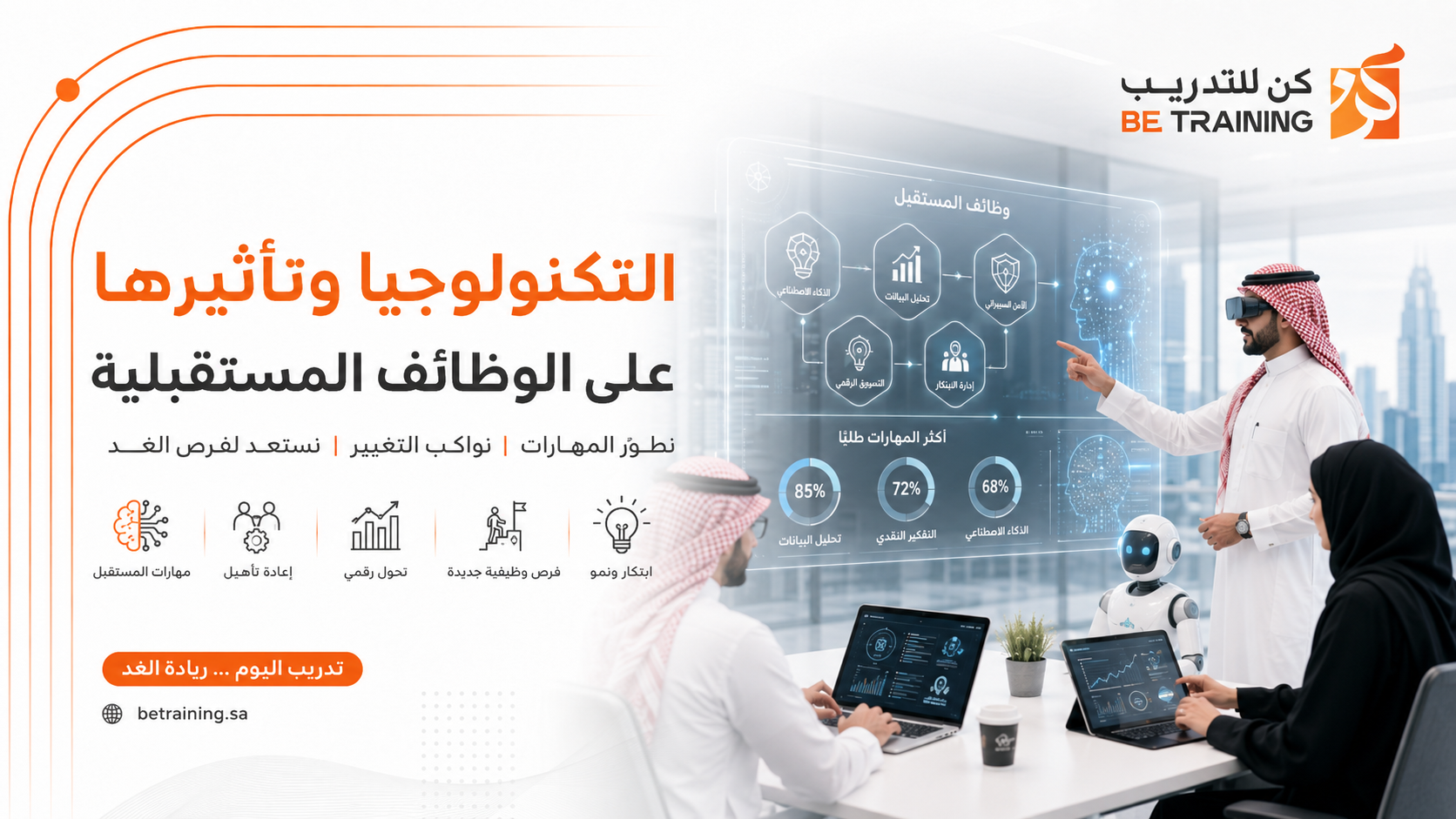
General Description
This course is designed to equip participants with a comprehensive understanding of Artificial Intelligence (AI) concepts and their practical applications in today's business environment. It focuses on leveraging generative and analytical AI technologies to improve operational efficiency, enhance decision-making, increase productivity, optimize customer experience, strengthen risk management, and foster organizational innovation. The course also explores global best practices, ethical and regulatory considerations, and effective strategies for integrating AI tools across business functions in alignment with digital transformation objectives and Saudi Vision 2030.
The Goals
By the end of this course, participants will be able to:
- Understand the fundamental concepts, types, and key applications of Artificial Intelligence in business.
- Analyze opportunities for leveraging AI technologies to improve operational processes and organizational performance.
- Utilize generative AI tools for content creation, data analysis, and decision support.
- Apply AI governance principles, ethical standards, and information security practices within the workplace.
- Develop an initial implementation roadmap for adopting AI solutions that support innovation, productivity, and digital transformation.
Target Auidence
- Executives and department managers.
- Business owners and entrepreneurs.
- Digital transformation and project managers.
- Human resources and organizational development professionals.
- Marketing, sales, and customer service specialists.
- Business intelligence and data analysts.
- IT professionals and digital transformation teams.
- Finance, procurement, and supply chain professionals.
- Management consultants and organizational development specialists.
- Graduates seeking career opportunities in Artificial Intelligence.
- Anyone interested in enhancing digital skills and applying AI in modern business environments.
The Features
- Up-to-date content reflecting the latest AI trends and technologies.
- Practical business-focused learning approach.
- Hands-on experience with leading generative AI tools.
- Real-world case studies from successful organizations.
- Techniques for improving productivity and operational efficiency.
- AI-powered decision-making and business analytics practices.
- Workflow automation using intelligent AI assistants.
- Coverage of AI governance, ethics, and information security.
- Comprehensive team-based practical project.
- Experienced instructors with expertise in AI and digital transformation.
- Certificate of completion upon successfully finishing the course.
Topics
Module 1: Introduction to Artificial Intelligence in Business
Topic 1: AI Concepts, History, and Evolution
Topic 2: Types of Artificial Intelligence and Their Applications Across Industries
Topic 3: Artificial Intelligence, Digital Transformation, and Saudi Vision 2030
Module 2: Artificial Intelligence Applications in Business
Topic 1: AI for Operations Management and Productivity Improvement
Topic 2: Enhancing Customer Experience through Intelligent Systems
Topic 3: AI Applications in Marketing, Sales, and Human Resources
Module 3: Generative Artificial Intelligence Tools
Topic 1: Smart Writing and AI-Assisted Content Creation Tools
Topic 2: Developing Presentations, Reports, and Data Analysis Using AI
Topic 3: Workflow Design and Task Automation Using AI Assistants
Module 4: AI-Driven Decision Making and Data Analytics
Topic 1: Data Analysis and Performance Indicator Extraction
Topic 2: Predictive Analytics and AI-Supported Decision Making
Topic 3: Practical Case Studies of AI Applications in Organizations
Module 5: Artificial Intelligence Governance and Implementation Planning
Topic 1: AI Ethics, Privacy, and Information Security
Topic 2: Challenges of AI Adoption and Risk Management
Topic 3: Developing an AI Implementation Roadmap for Organizations
Learning outcomes
- Practical AI implementation plan.
- Proposed Key Performance Indicators (KPIs).
- AI implementation roadmap.
- Continuous improvement recommendations.
Requirements And Conditions
No prior experience in Artificial Intelligence is required. However, participants are recommended to have:
- Basic computer skills.
- Familiarity with Microsoft Office applications.
- Interest in digital transformation and emerging technologies.
- Willingness to learn and apply AI tools.
- A laptop for practical sessions (recommended).
- Readiness to participate in collaborative activities and the practical project.
FAQs
The Blog
Artificial Intelligence in the Business Environment: Driving Innovation, Productivity, and Smarter Decision-Making
Artificial Intelligence (AI) has become one of the most transformative technologies shaping modern organizations. What was once considered a futuristic concept is now a practical business tool that enables companies to improve efficiency, automate operations, enhance customer experiences, and make data-driven decisions with greater accuracy.
Organizations across industries are investing heavily in AI-powered solutions to remain competitive in an increasingly digital economy. From automating repetitive tasks to generating valuable business insights, AI is changing how businesses operate, collaborate, and innovate.
As digital transformation accelerates worldwide, professionals who understand AI technologies are becoming highly valuable assets within their organizations. Learning how to apply Artificial Intelligence effectively is no longer limited to technology specialists—it has become an essential business skill for managers, executives, and professionals across every department.
What Is Artificial Intelligence in the Business Environment?
Artificial Intelligence in business refers to the use of intelligent systems capable of performing tasks that traditionally require human intelligence. These tasks include analyzing data, recognizing patterns, predicting future outcomes, automating workflows, generating content, and supporting strategic decision-making.
Unlike conventional software, AI systems continuously learn from data and improve their performance over time. This enables organizations to respond faster to market changes, reduce operational costs, and improve overall business performance.
Today, AI supports organizations in solving complex business challenges while creating new opportunities for innovation and sustainable growth.
Why Artificial Intelligence Matters for Modern Organizations
Businesses operate in an environment characterized by rapid technological change, increasing customer expectations, and intense market competition. Traditional business methods alone are no longer sufficient to maintain long-term success.
Artificial Intelligence helps organizations by:
-
Improving operational efficiency.
-
Automating repetitive and time-consuming tasks.
-
Enhancing productivity across departments.
-
Supporting faster and more accurate decision-making.
-
Reducing operational costs.
-
Delivering personalized customer experiences.
-
Identifying business opportunities through advanced analytics.
-
Strengthening organizational competitiveness.
Companies that successfully integrate AI into their operations often experience measurable improvements in performance, innovation, and customer satisfaction.
Applications of Artificial Intelligence Across Business Functions
Artificial Intelligence is transforming nearly every department within modern organizations.
Operations Management
AI enables organizations to optimize workflows, monitor business processes, allocate resources efficiently, and identify operational bottlenecks before they affect productivity.
Predictive maintenance, intelligent scheduling, and process automation are examples of how AI improves operational performance.
Customer Experience
Customer expectations continue to rise, making exceptional service a competitive advantage.
AI-powered chatbots, virtual assistants, and recommendation engines allow organizations to provide 24/7 customer support, respond quickly to inquiries, personalize interactions, and improve overall customer satisfaction.
These intelligent systems also reduce response times while lowering operational costs.
Marketing and Sales
Artificial Intelligence has revolutionized digital marketing by enabling organizations to understand customer behavior more effectively.
Marketing teams use AI to:
-
Analyze customer preferences.
-
Segment target audiences.
-
Personalize marketing campaigns.
-
Predict purchasing behavior.
-
Optimize advertising performance.
-
Generate marketing content.
Sales teams also benefit from AI-powered forecasting tools that identify high-potential leads and improve conversion rates.
Human Resources
Human Resources departments increasingly rely on AI to streamline recruitment and talent management.
AI supports HR professionals by:
-
Screening resumes automatically.
-
Identifying qualified candidates.
-
Predicting employee turnover.
-
Measuring workforce performance.
-
Recommending personalized learning paths.
-
Improving employee engagement.
These capabilities allow HR teams to focus more on strategic workforce planning rather than administrative tasks.
Finance and Risk Management
Finance departments use Artificial Intelligence to analyze financial data, detect anomalies, forecast revenue, and manage organizational risks.
AI can automate financial reporting, identify suspicious transactions, improve budgeting accuracy, and support compliance with financial regulations.
By processing large volumes of financial information quickly, AI enables better strategic planning and informed financial decision-making.
Supply Chain and Procurement
Artificial Intelligence plays a significant role in modern supply chain management.
Organizations use AI to forecast demand, optimize inventory levels, improve supplier selection, reduce logistics costs, and minimize supply chain disruptions.
These capabilities improve operational resilience while increasing overall efficiency.
Generative Artificial Intelligence: Transforming Everyday Business Activities
Generative AI has become one of the fastest-growing technologies in today's workplace.
Modern AI platforms assist professionals in creating content, writing reports, developing presentations, summarizing meetings, generating ideas, analyzing documents, and producing business communications within minutes.
Employees across various departments can significantly reduce manual work while improving both speed and quality.
Common applications include:
-
Business writing.
-
Proposal development.
-
Email drafting.
-
Presentation design.
-
Content creation.
-
Data summarization.
-
Strategic brainstorming.
-
Report generation.
Generative AI allows organizations to increase productivity while enabling employees to focus on higher-value activities.
AI-Powered Decision-Making
Successful organizations rely on accurate information to make informed decisions.
Artificial Intelligence strengthens decision-making by analyzing structured and unstructured data, identifying patterns, forecasting future trends, and providing actionable recommendations.
Executives can evaluate multiple business scenarios, measure potential risks, and make evidence-based decisions with greater confidence.
Rather than replacing human judgment, AI enhances it by delivering deeper insights and reducing uncertainty.
Artificial Intelligence and Business Productivity
Increasing productivity remains a priority for organizations of every size.
Artificial Intelligence contributes significantly by automating repetitive administrative work, reducing manual errors, accelerating business processes, and improving resource utilization.
Benefits include:
-
Faster workflow execution.
-
Higher employee productivity.
-
Improved service quality.
-
Better collaboration.
-
Reduced operational expenses.
-
More time for innovation and strategic initiatives.
Organizations that effectively integrate AI often gain a sustainable competitive advantage through continuous operational improvement.
Ethical Considerations and AI Governance
As AI adoption continues to grow, organizations must ensure responsible implementation.
Responsible AI requires clear governance policies that address:
-
Data privacy.
-
Information security.
-
Transparency.
-
Fairness.
-
Accountability.
-
Regulatory compliance.
-
Bias mitigation.
Establishing AI governance frameworks helps organizations maximize business value while minimizing legal, operational, and reputational risks.
Ethical AI is becoming a fundamental requirement for organizations committed to long-term sustainability and stakeholder trust.
Challenges of AI Implementation
Although Artificial Intelligence offers tremendous opportunities, organizations may encounter several implementation challenges.
Common challenges include:
-
Limited AI expertise.
-
Organizational resistance to change.
-
Poor data quality.
-
Legacy technology infrastructure.
-
Cybersecurity concerns.
-
Budget constraints.
-
Regulatory compliance requirements.
These challenges can be addressed through strategic planning, employee training, executive support, and phased AI adoption initiatives.
Organizations that invest in change management are more likely to achieve successful AI transformation.
Building an AI Implementation Strategy
Successful AI adoption requires a structured implementation roadmap.
Organizations should begin by assessing their current business environment, identifying operational challenges, and prioritizing high-impact use cases.
The implementation process typically includes:
-
Assessing organizational readiness.
-
Identifying business opportunities.
-
Selecting appropriate AI technologies.
-
Preparing high-quality business data.
-
Training employees.
-
Launching pilot projects.
-
Measuring performance through KPIs.
-
Scaling successful AI initiatives across the organization.
A strategic approach minimizes implementation risks while maximizing return on investment.
The Importance of AI Training
Technology evolves rapidly, making continuous learning essential for today's workforce.
Professional AI training programs help employees understand AI concepts, develop practical skills, and confidently integrate intelligent technologies into their daily work.
Hands-on learning enables participants to move beyond theory and apply AI tools to real business challenges.
Organizations that invest in employee development build stronger digital capabilities, improve innovation, and accelerate their digital transformation journey.
Artificial Intelligence is no longer a future technology—it is a business necessity.
Organizations that embrace AI are better positioned to improve operational efficiency, enhance customer experiences, increase productivity, strengthen decision-making, and create sustainable competitive advantages.
As AI technologies continue to evolve, professionals who understand how to apply them effectively will play a critical role in shaping the future of business.
Investing in AI knowledge, developing practical implementation strategies, and fostering a culture of innovation will enable organizations to thrive in an increasingly digital economy. Artificial Intelligence is not simply about adopting new technology; it is about transforming the way organizations think, operate, and create value for customers, employees, and society.