General Description
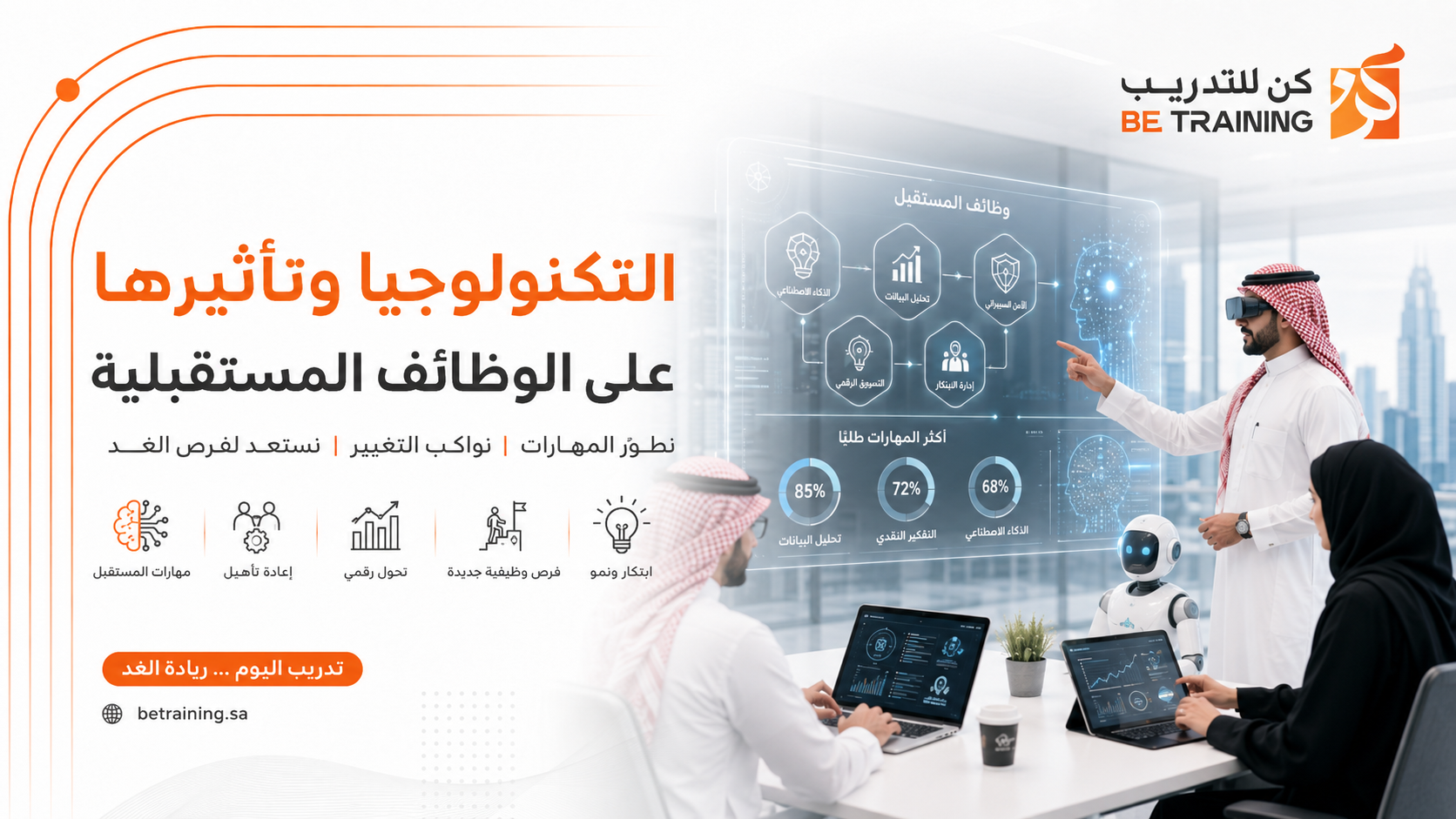
Technology has become the primary driver of economic and social transformation in the 21st century. Advances in Artificial Intelligence (AI), automation, robotics, the Internet of Things (IoT), big data analytics, and cloud computing have fundamentally reshaped the nature of jobs and the global labor market. Many traditional occupations are evolving or disappearing, while new career opportunities are emerging that require a different set of skills aligned with the digital economy.
This course is designed to introduce participants to the most influential emerging technologies and their impact on the future of work. It enables participants to understand global labor market trends, explore future career opportunities, develop the competencies required to remain professionally competitive, and create a personalized career development plan that aligns with the digital transformation era.
The Goals
By the end of this course, participants will be able to:
-
Understand the concepts of the Fourth and Fifth Industrial Revolutions.
-
Explain the impact of Artificial Intelligence on the future of jobs.
-
Distinguish between jobs at risk and emerging future careers.
-
Analyze the effects of automation and robotics on the workplace.
-
Identify the key technologies transforming the labor market.
-
Recognize the essential future skills required through 2035.
-
Develop a professional development plan aligned with future workforce trends.
-
Utilize Artificial Intelligence tools to improve productivity.
-
Understand the importance of lifelong learning and continuous professional development.
-
Explore emerging career opportunities.
-
Strengthen innovation, creative thinking, and problem-solving skills.
-
Develop a personal career roadmap for future growth.
Target Auidence
-
Government sector employees
-
Private sector employees
-
Managers and organizational leaders
-
Human Resources professionals
-
Learning and Development professionals
-
Recent graduates
-
Job seekers
-
Entrepreneurs
-
Startup founders
-
University students
-
Professionals interested in digital transformation
-
Anyone seeking to prepare for and advance their future career
The Features
This course provides a clear and practical understanding of how technology is shaping the future of work. It introduces participants to key emerging technologies such as Artificial Intelligence, automation, robotics, the Internet of Things, big data analytics, and cloud computing.
The course helps participants understand jobs that may change or decline, explore emerging future careers, and identify the most important skills required through 2035, including lifelong learning, creative thinking, problem-solving, adaptability, and the effective use of AI tools to improve productivity.
It also enables participants to develop a personalized career development plan aligned with the needs of the future labor market, making it suitable for employees, managers, HR professionals, recent graduates, entrepreneurs, job seekers, and professionals interested in digital transfor
Topics
Unit One: Technology and the Transformation of the Labor Market
Module 1: Career Planning
-
Setting Career Goals
-
Skills Assessment
-
Developing a Career Plan
-
Skills Gap Analysis
-
Professional Development Roadmap
Module 2: Leveraging Technology
-
Artificial Intelligence Tools
-
Productivity Enhancement
-
Personal Automation
-
Time Management
-
Digital Content Creation
Module 3: Future Opportunities
-
Emerging Careers
-
Entrepreneurship
-
The Digital Economy
-
Global Employment Opportunities
-
Technology-Based Ventures
Module 4: Practical Application
-
Case Studies
-
Interactive Workshops
-
Developing a Personal Career Plan
-
Future Workforce Scenario Analysis
-
Career Readiness Assessment
Learning outcomes
By the end of this course, participants will be able to:
-
Understand the technological transformations shaping the future labor market.
-
Analyze the impact of Artificial Intelligence on current and future jobs.
-
Identify high-demand careers and emerging employment opportunities.
-
Acquire the knowledge and competencies required for future workforce success.
-
Develop a personalized professional development plan.
-
Apply Artificial Intelligence tools effectively in the workplace.
-
Enhance adaptability and resilience in response to technological change.
-
Make informed career decisions based on future labor market trends.
-
Improve readiness for the digital economy and future workplace.
-
Contribute to building a more innovative, agile, and sustainable work environment.
Requirements And Conditions
This course does not require advanced technical experience, as it is designed for participants from different professional and educational backgrounds. Participants are expected to have an interest in technology, digital transformation, and career development, along with a willingness to understand the impact of Artificial Intelligence and emerging technologies on the future of jobs.
FAQs
The Blog
In recent years, the world has been experiencing rapid and unprecedented changes in the labor market due to the massive advancement of modern technologies. Work is no longer what it used to be. Many traditional jobs are being transformed or disappearing, while new roles are emerging that rely heavily on digital knowledge and technical skills. This transformation is not limited to a specific sector but affects almost every industry, including manufacturing, education, healthcare, and services.
It has become clear that technology is no longer just a supporting tool. It is now a core driver reshaping how work is performed, how decisions are made, and how organizations operate.
Digital Transformation and the Reshaping of Work
Digital transformation is one of the most influential forces changing the nature of employment today. Modern companies increasingly rely on smart systems, automation, and data-driven decision-making in their daily operations.
As a result, repetitive and routine tasks are being reduced, while demand is increasing for roles that require analytical thinking, creativity, and problem-solving. Tasks that once required significant human effort and time can now be completed in seconds using advanced systems.
Organizations today are not only looking for experienced workers but also for individuals who can effectively use modern digital tools and adapt to evolving technologies.
Artificial Intelligence and Job Transformation
Artificial Intelligence (AI) is one of the most powerful technologies shaping the future of work. It can process large amounts of data, identify patterns, learn from experience, and support decision-making processes.
In many industries, AI is already performing tasks that were once exclusively handled by humans, such as customer support, data analysis, and trend forecasting.
However, this does not mean that humans will be fully replaced. Instead, job roles are evolving. Employees are shifting from manual execution to supervision, strategic thinking, and decision-making roles supported by intelligent systems.
Jobs Most Affected by Technological Change
Several job categories have been significantly impacted by technological advancement, especially those based on repetitive and rule-based tasks. These include administrative roles, data entry, and basic accounting functions.
On the other hand, some roles have become more important than ever, such as data analysts, software developers, cybersecurity specialists, and digital system managers.
This shift shows an important reality: technology does not eliminate opportunities, but rather redistributes them across new domains.
Emerging Future Careers
With the continuous evolution of technology, many new career paths have emerged that did not exist a decade ago. These roles are heavily dependent on innovation and digital expertise.
Some of the most in-demand future careers include:
- Artificial Intelligence Specialists
- Data Scientists and Big Data Analysts
- Cybersecurity Experts
- Software and Application Developers
- User Experience (UX) Designers
- Digital Transformation Managers
These careers represent the future of the global labor market, and demand for them is expected to grow significantly in the coming years.
Essential Skills for the Future
Academic qualifications alone are no longer sufficient to guarantee career success. Instead, personal and technical skills play a critical role in determining professional opportunities.
Some of the most important future skills include:
- Critical thinking and analytical reasoning
- Creative problem-solving
- Digital literacy and technical proficiency
- Continuous learning and self-development
- Effective communication skills
- Adaptability to rapid change
These skills are essential for anyone aiming to succeed in the modern workforce.
The Importance of Lifelong Learning
In a fast-changing technological environment, learning is no longer a phase that ends after formal education. It has become a continuous lifelong process.
Individuals who consistently upgrade their skills and stay updated with technological trends are more likely to succeed and grow in their careers.
At the same time, organizations increasingly prefer employees who demonstrate a strong willingness to learn and adapt, as this ensures long-term competitiveness.
The Role of Organizations in Workforce Development
Organizations play a crucial role in helping employees adapt to digital transformation. The focus is no longer only on hiring talent but also on developing it continuously.
Companies can support this through:
- Continuous training programs
- Digital learning platforms
- Encouraging innovation in the workplace
- Reskilling and upskilling employees
This approach helps reduce the gap between current skills and future job requirements.
Challenges Facing the Future Workforce
Despite the opportunities created by technological advancement, several challenges also exist.
The most notable challenges include:
- The displacement of certain traditional jobs
- The constant need for new skills
- Rapidly changing market demands
- The gap between education systems and labor market needs
Addressing these challenges requires both individuals and organizations to adopt a proactive and flexible mindset.
How to Prepare for the Future of Work
Preparing for the future job market is not a single action but an ongoing process that requires continuous effort.
Key steps include:
- Developing digital and technical skills
- Staying updated with industry trends
- Gaining diverse practical experience
- Building a flexible and growth-oriented mindset
- Using AI tools in daily work activities
These steps significantly increase the chances of success in the evolving job market.
Technology is no longer a secondary factor in the workplace; it has become the main force shaping the future of employment. As this transformation continues, career success will depend increasingly on adaptability, continuous learning, and the ability to use modern tools effectively.
The future does not wait for anyone. Those who adapt today will be the ones leading tomorrow.