General Description
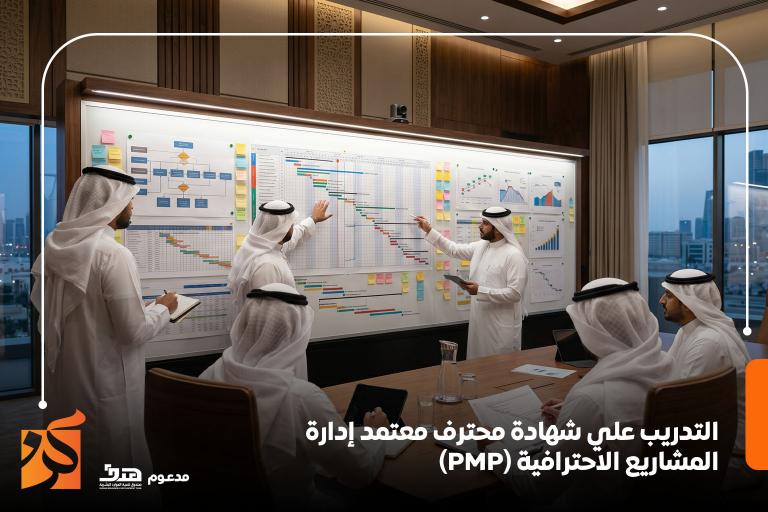
The PMP certification is the preeminent global standard that proves your competency in leading and managing complex projects professionally according to Project Management Institute (PMI) methodologies. Through the BeTraining platform, you will learn strategic planning, risk management, and effective team leadership to ensure successful project execution on time. This track is your ideal choice to elevate your career path and secure distinguished job opportunities with competitive salaries in major local and international companies.
The Goals
The importance of project management lies in successfully delivering the project with high quality, within the specified budget, and according to the expected time, using the available human resources. This is exactly what the Certified Business Professional in Project Management certification helps you achieve.
The detailed objectives include:
-
Developing a comprehensive understanding of project management theory, including core concepts, processes, tools, and techniques.
-
Acquiring the necessary skills to analyze the project's internal and external environment.
-
Developing the ability to identify and evaluate the opportunities and challenges facing the project.
-
Acquiring the necessary skills to develop and implement a successful project plan.
-
Acquiring the necessary skills to manage and lead the project team.
-
Acquiring the necessary skills to monitor and control project performance.
-
Acquiring the necessary skills for problem-solving and decision-making within the project environment.
Target Auidence
The program is designed for those currently working or aspiring to work in:
-
Project Managers and Team Leaders across various sectors.
-
Project Management Office (PMO) members and Administrative Coordinators.
-
Supervisors and Engineers seeking to enhance their leadership skills.
-
Individuals striving to obtain the PMP certification to boost their professional career internationally.
The Features
Obtaining the PMP certification provides numerous exceptional professional and competitive advantages, most notably:
-
International Recognition: It is considered the gold standard for project management in all countries worldwide.
-
Career Development: It opens doors to senior leadership positions in major companies.
-
Increased Income: Studies indicate that PMP holders earn significantly higher salaries.
-
Professional Network: Joining a global community of millions of certified professionals.
Topics
Domain 1: People Domain
-
Building and leading work teams and resolving conflicts efficiently.
-
Supporting team performance and mentoring members to achieve goals.
Domain 2: Process Domain
-
Project initiation and planning of scope, schedule, and costs.
-
Managing project quality, procurement, and successfully closing projects or phases.
Domain 3: Business Environment Domain
-
Planning and managing regulatory compliance and ensuring project value delivery.
-
Supporting organizational change and understanding the project's impact on the surrounding environment.
Domain 4: Management Methodologies (Agile & Hybrid)
-
Project management using Agile methodologies.
-
How to integrate traditional and Agile methodologies to achieve the best results.
Domain 5: Risk and Stakeholder Management
-
Identifying risks and developing appropriate response plans.
-
Engaging stakeholders and managing their expectations.
Learning outcomes
By the end of the program, the trainee will be able to:
First: Knowledge Outcomes
-
Grasp the core concepts of project management in accordance with the PMBOK Guide – Seventh Edition.
-
Distinguish between different methodologies (Predictive, Agile, and Hybrid) and their various applications.
-
Gain a detailed understanding of the 10 Knowledge Areas and the 49 Project Management Processes (from previous editions) and link them to the modern Agile context.
-
Analyze Risks, Quality, Time, and Cost using certified professional tools.
-
Identify Stakeholders and communicate with them efficiently.
Second: Skill Outcomes
-
Apply project management tools and techniques practically to real-world case studies.
-
Develop key project documents, such as the Scope Management Plan, Project Schedule, and Risk Register.
-
Utilize essential analytical tools, including:
-
Earned Value Management (EVM)
-
PERT Chart
-
Gantt Chart
-
RACI Matrix
-
-
Manage project teams effectively and resolve conflicts professionally.
-
Develop an effective Communication Plan and monitor actual project progress.
Third: Qualification & Certification Outcomes
-
Fulfill the 35-contact hour requirement to qualify for the PMP exam from the Project Management Institute (PMI).
-
Fully prepare to pass the PMP Exam through:
-
Simulated practice exams mirroring the real test.
-
Time management strategies for the exam duration.
-
Reviewing individual strengths and weaknesses for each trainee.
-
-
Obtain a Certificate of Completion accredited by the training provider.
Requirements And Conditions
-
Completion of 35 contact hours of formal project management education.
-
A four-year university degree with at least 36 months of unique, non-overlapping professional project management experience.
-
OR a high school diploma (or global equivalent) with at least 60 months of unique, non-overlapping professional project management experience.
-
Passing the official international exam administered by the Project Management Institute (PMI).
FAQs
Reviews (11)
-
دورة كانت مثمرة
-
المدرب جدا ممتاز ولكن للاسف التنظيم التقني سيء للاسف
-
كانت ممتازه جدا
-
أتمنى تحسين خدمة العملاء وتعاقد مع الماجستير مع الجامعات السعودية وتنزيل أسعار الشهادات الاحترافية
-
دورة ممتازة
-
بحاجة الى التجاوب بشكل سريع مع الاستفسارات
-
دورة استفدت منها مصطلحات ومعلومات في اداره المشاريع


The Blog
In today's highly competitive and fast-changing business environment, project management has become a fundamental element for the success of organizations and the efficient achievement of their goals. Success is no longer dependent solely on ideas, but on the ability to plan, execute, and effectively manage resources, time, and costs.
Hence stems the importance of training for the Project Management Professional (PMP) certification. It is considered one of the most prestigious global certifications in the field of project management, empowering trainees to lead projects professionally according to international methodologies and accredited standards.
What is the PMP Certification?
The PMP certification is a globally recognized professional credential specialized in project management. It aims to qualify individuals to acquire the necessary skills to successfully plan, execute, and manage projects across various sectors.
This certification focuses on applying global best practices in project management, making the holder capable of dealing with various challenges and achieving effective results in the workplace.
The Importance of Project Management in Organizations
Project management has become one of the most vital functions within any organization today, as it contributes to:
-
Organizing workflow and achieving goals efficiently.
-
Managing time, cost, and resources effectively.
-
Mitigating risks and improving the quality of execution.
-
Ensuring project success according to specified plans.
With the expansion and complexity of business, the presence of a professional project manager has become a necessity rather than an option.
Why is the PMP Certification Important?
The PMP certification is considered one of the most powerful credentials in the field of project management because it:
-
Is globally recognized across various industries.
-
Enhances employment opportunities and career advancement.
-
Proves the possession of professional project management skills.
-
Relies on accredited global management methodologies.
Furthermore, it grants the trainee a strong competitive edge in both local and international labor markets.
Skills Acquired by the Trainee
Through PMP certification training, the trainee acquires a set of essential skills, such as:
-
Project planning and scheduling.
-
Managing human and financial project resources.
-
Risk analysis and developing mitigation plans.
-
Monitoring project execution and ensuring quality.
-
Leadership and decision-making skills.
-
Effective communication with work teams and stakeholders.
The Role of the Project Manager in Organizational Success
The project manager plays a pivotal role in the success of any project, being responsible for:
-
Transforming ideas into clear executive plans.
-
Monitoring workflow and ensuring adherence to deadlines.
-
Solving problems that may face the project.
-
Achieving project goals within the specified budget.
The Future of Project Management
With the increasing size and complexity of projects across various sectors, the demand for professional project managers is constantly rising. Additionally, the reliance on modern project management methodologies has made this field one of the fastest-growing areas with abundant opportunities in the job market.
Training for the PMP certification represents a significant step for anyone seeking professionalism in the field of project management. It does not only provide organizational and managerial skills but also qualifies the trainee to lead projects successfully and achieve tangible results in the work environment.
Investing in this certification is an investment in a strong professional future and expansive career opportunities across various sectors.