General Description
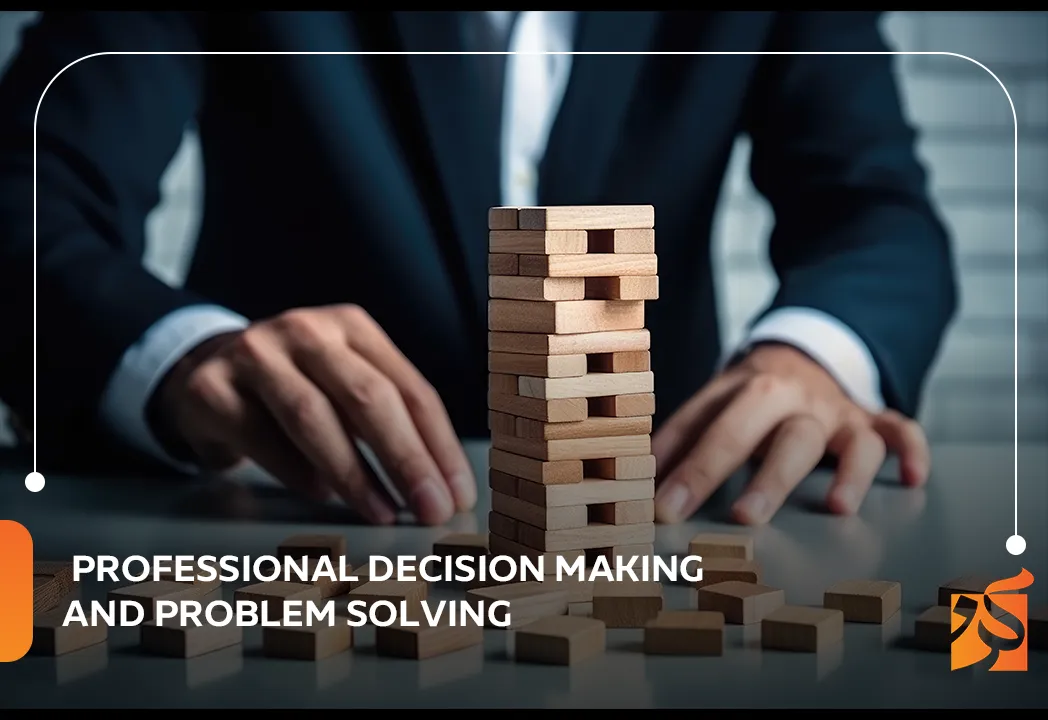
The Professional Decision Making and Problem Solving (TVTC) course is designed to develop participants’ analytical thinking and decision-making skills, as well as enhance their ability to approach problems in a structured and effective manner. The course provides learners with tools and methodologies to analyze situations, evaluate alternatives, and select the most appropriate solutions based on clear criteria.
It also helps build a professional mindset capable of handling workplace challenges and making well-informed decisions that reduce risks and improve outcomes.
The Goals
- Understand decision-making and problem-solving concepts.
- Learn systematic problem-solving steps.
- Develop analytical thinking skills.
- Improve ability to evaluate alternatives.
- Make effective workplace decisions.
- Reduce decision-making errors.
- Strengthen critical thinking skills.
- Handle complex situations with confidence.
Target Auidence
- Employees across all sectors.
- Managers and team leaders.
- Entrepreneurs and business owners.
- Students and job seekers.
- Individuals in decision-intensive roles.
- Anyone seeking to improve thinking skills.
The Features
- Practical and easy-to-apply content.
- Effective decision-making tools.
- Real workplace examples.
- Development of critical thinking skills.
- Increased confidence in decision-making.
- No technical background required.
- Suitable for all job levels.
Topics
Introduction to Decision Making
- Definition of decision making.
- Importance in the workplace.
- Types of decisions.
Problem-Solving Steps
- Identifying the problem.
- Gathering information.
- Analyzing causes.
- Generating solutions.
- Selecting the best solution.
- Implementing and evaluating.
Problem Analysis Tools
- Root cause analysis.
- Brainstorming techniques.
- SWOT analysis.
Thinking Skills
- Critical thinking.
- Analytical thinking.
- Creative thinking.
Workplace Decision Making
- Decision making under pressure.
- Risk management.
- Evaluating outcomes.
Learning outcomes
By the end of the course, participants will be able to:
- Analyze problems systematically.
- Identify root causes accurately.
- Generate effective solutions.
- Make informed decisions.
- Use modern analysis tools.
- Improve job performance.
- Handle complex situations confidently.
Requirements And Conditions
- No prior experience required.
- Basic logical thinking skills.
- Interest in problem solving.
- Motivation for professional development.
FAQs
The Blog
Decision making and problem solving are among the most essential skills in modern workplaces. In a fast-changing and highly competitive environment, professionals are constantly required to analyze situations, evaluate options, and make informed decisions that affect performance, productivity, and organizational success.
The Professional Decision Making and Problem Solving (TVTC) course is designed to equip learners with structured thinking tools and practical methodologies to approach challenges effectively. It focuses on developing analytical thinking, improving judgment, and strengthening the ability to choose the most suitable solutions based on logic and evidence.
This course is not only about solving problems—it is about building a professional mindset that can handle uncertainty, complexity, and pressure with confidence.
What is Decision Making?
Decision making is the cognitive process of selecting a course of action from multiple alternatives. It involves gathering information, analyzing options, and choosing the best possible solution based on defined criteria.
In professional environments, decision making is a continuous activity that influences daily operations, strategic planning, and long-term outcomes.
Effective decision making requires:
- Clear understanding of the situation.
- Access to relevant and accurate information.
- Logical evaluation of alternatives.
- Awareness of risks and consequences.
Importance of Decision Making in the Workplace
Strong decision-making skills are critical for organizational success. Poor decisions can lead to inefficiencies, financial loss, and operational failure, while effective decisions improve performance and competitiveness.
Key benefits include:
- Improved productivity and efficiency.
- Better resource management.
- Faster problem resolution.
- Enhanced organizational performance.
- Increased confidence in leadership roles.
Organizations depend on employees who can make sound decisions under different conditions.
What is Problem Solving?
Problem solving is a structured process used to identify issues, analyze their causes, and implement effective solutions. It requires both analytical and creative thinking to address challenges in a systematic way.
Unlike simple decision making, problem solving often involves deeper investigation and long-term solutions.
Steps of Problem Solving
The problem-solving process typically includes several key stages:
1. Identifying the Problem
Clearly defining the issue is the most important step. A well-defined problem leads to more accurate solutions.
2. Gathering Information
Collecting relevant data helps in understanding the scope and impact of the problem.
3. Analyzing the Causes
Tools such as root cause analysis help identify the underlying reasons behind the problem.
4. Generating Possible Solutions
Brainstorming and creative thinking are used to develop multiple alternatives.
5. Evaluating Alternatives
Each solution is assessed based on feasibility, cost, time, and impact.
6. Selecting the Best Solution
The most effective and practical solution is chosen for implementation.
7. Implementation and Evaluation
The solution is applied, and results are monitored to ensure effectiveness.
Tools for Problem Analysis
Several structured tools support effective problem solving:
SWOT Analysis
Used to evaluate strengths, weaknesses, opportunities, and threats in a situation.
Brainstorming
A creative technique for generating multiple ideas without immediate judgment.
Root Cause Analysis
Focuses on identifying the fundamental cause of a problem rather than its symptoms.
Decision Matrices
Help compare alternatives using weighted criteria for more objective decision making.
Key Thinking Skills
Effective decision making and problem solving rely on strong cognitive abilities, including:
Critical Thinking
Evaluating information objectively and logically.
Analytical Thinking
Breaking down complex problems into manageable components.
Creative Thinking
Developing innovative and unconventional solutions.
Decision Making Under Pressure
In many workplace situations, decisions must be made quickly under stress or uncertainty. This requires:
- Maintaining emotional control.
- Prioritizing essential information.
- Avoiding impulsive reactions.
- Relying on structured thinking methods.
Professionals who can perform well under pressure are highly valuable in dynamic environments.
Risk Management in Decision Making
Every decision involves some level of risk. Effective professionals assess risks before implementation to minimize negative outcomes.
This includes:
- Identifying potential risks.
- Evaluating probability and impact.
- Developing contingency plans.
- Monitoring outcomes after implementation.
Challenges in Decision Making
Despite having structured tools, decision makers often face challenges such as:
- Lack of complete information.
- Time constraints.
- Complex and dynamic environments.
- Cognitive bias and emotional influence.
Overcoming these challenges requires experience, discipline, and continuous learning.
Role of Professional Mindset
A professional mindset significantly improves decision quality. It is characterized by:
- Objectivity and logical reasoning.
- Data-driven thinking.
- Responsibility and accountability.
- Structured and disciplined analysis.
This mindset reduces errors and improves consistency in outcomes.
Applications in the Workplace
Decision making and problem-solving skills are applied in various workplace situations, such as:
- Resolving customer complaints.
- Improving operational efficiency.
- Managing organizational crises.
- Planning projects and strategies.
- Handling team-related issues.
Future of Decision Making
With the rise of artificial intelligence and data analytics, decision making is becoming increasingly data-driven and automated. However, human judgment remains essential for interpreting results and making ethical and strategic choices.
Future trends include:
- AI-assisted decision systems.
- Predictive analytics for planning.
- Real-time data-driven decisions.
- Increased reliance on digital dashboards.
Conclusion
The Professional Decision Making and Problem Solving (TVTC) course provides essential skills for navigating complex workplace challenges. It equips learners with structured methods, analytical tools, and critical thinking abilities that enhance both individual and organizational performance.
In today’s fast-paced world, the ability to make sound decisions and solve problems effectively is not just an advantage—it is a core professional competency that determines success, leadership potential, and career growth.
Ultimately, mastering these skills empowers individuals to act confidently, think strategically, and contribute meaningfully to any organization they are part of.