General Description
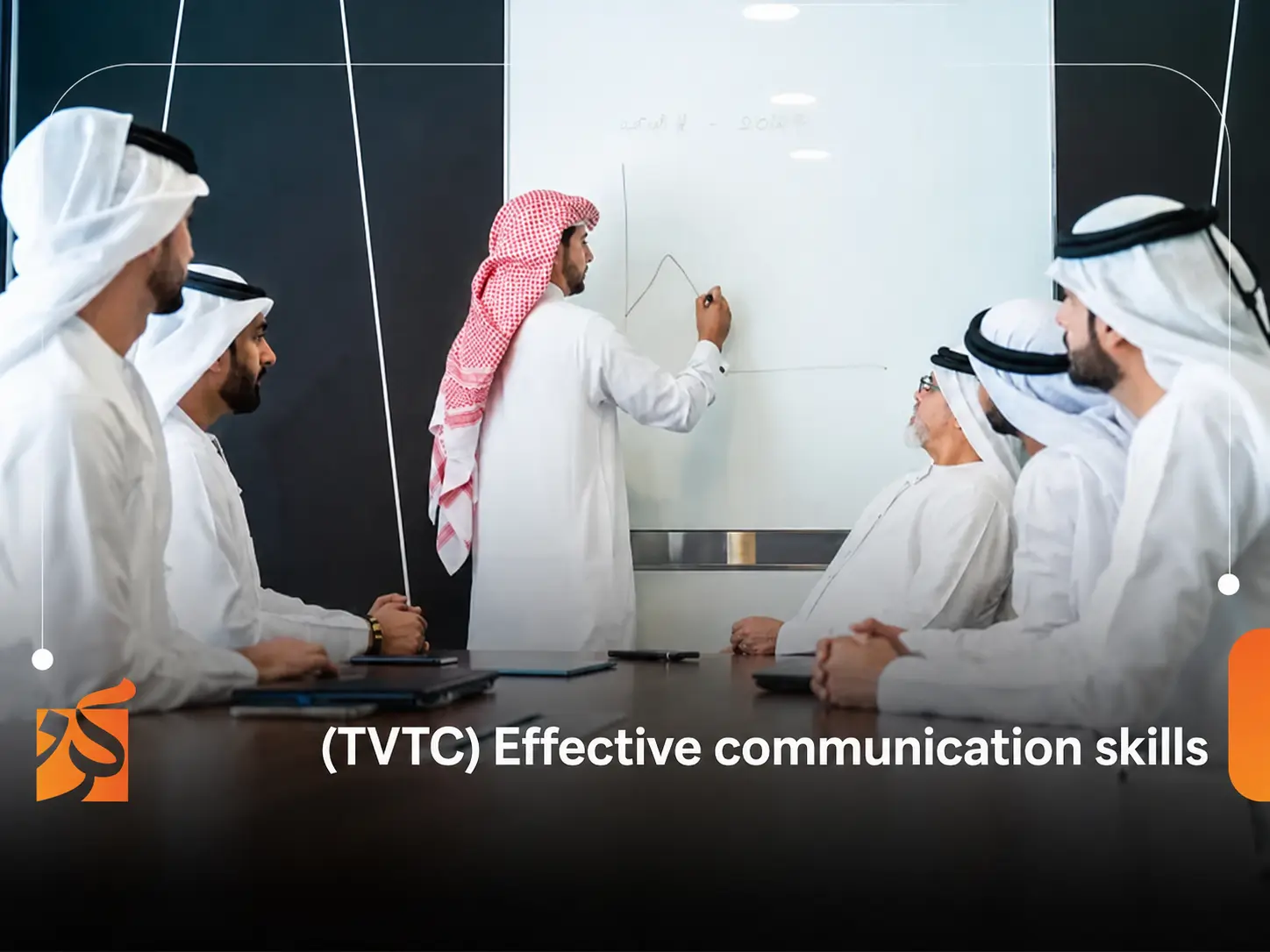
The Effective Communication Skills (TVTC) course is designed to enhance participants' ability to communicate clearly, confidently, and professionally in both personal and workplace environments. The course focuses on verbal and non-verbal communication, active listening, relationship building, message delivery, and overcoming communication barriers. Participants will develop practical skills that improve collaboration, leadership, teamwork, and overall communication effectiveness.
The Goals
- Understand the principles of effective communication.
- Develop verbal and non-verbal communication skills.
- Improve active listening abilities.
- Enhance clarity and confidence in message delivery.
- Build successful professional and personal relationships.
- Understand different communication styles.
- Reduce misunderstandings and communication conflicts.
- Strengthen workplace communication effectiveness.
Target Auidence
- Employees across various industries.
- Supervisors and team leaders.
- Department managers.
- Customer service professionals.
- Entrepreneurs and business owners.
- Students and fresh graduates.
- Anyone seeking to improve communication skills.
The Features
- Interactive and practical learning approach.
- Real-life workplace communication scenarios.
- Focus on personal and professional communication.
- Confidence-building communication exercises.
- Training in influence and persuasion techniques.
- Improved relationship-building capabilities.
- Modern communication strategies and practices.
Topics
Introduction to Effective Communication
- Communication concepts and principles.
- Components of communication.
- Importance of communication in professional success.
Verbal Communication Skills
- Choosing appropriate language.
- Speaking clearly and confidently.
- Delivering messages effectively.
Non-Verbal Communication Skills
- Body language.
- Facial expressions.
- Tone of voice.
Active Listening
- Listening techniques.
- Understanding messages accurately.
- Providing effective feedback.
Workplace Communication
- Communication with colleagues and management.
- Conducting effective meetings.
- Team collaboration.
Communication Challenges
- Resolving misunderstandings.
- Conflict management.
- Overcoming communication barriers.
Learning outcomes
By the end of the course, participants will be able to:
- Communicate clearly and professionally.
- Improve listening and interaction skills.
- Build strong professional relationships.
- Handle communication situations effectively.
- Minimize communication-related conflicts.
- Strengthen teamwork and collaboration.
- Increase influence and persuasion abilities.
Requirements And Conditions
- No prior experience required.
- Interest in personal and professional development.
- Willingness to participate in training activities.
FAQs
Reviews (8)
-
ممتازه
-
ممتازة
-
ممتازة جدا
-
ممتازة- يعطيكم العافية
-
زي الفل
-
زي الفل

The Blog
Communication is one of the most important skills a person can possess in both personal and professional life. Every interaction, whether with colleagues, customers, managers, family members, or friends, depends on the ability to exchange ideas, information, and emotions effectively. In today's fast-paced and interconnected world, strong communication skills have become essential for success in virtually every field.
Organizations increasingly recognize that technical expertise alone is not enough to achieve outstanding results. Employees who can communicate clearly, listen actively, collaborate effectively, and build positive relationships are often the individuals who excel in leadership roles and contribute significantly to organizational success.
The Effective Communication Skills (TVTC) course is designed to help participants develop the practical communication abilities needed to thrive in modern workplaces and everyday interactions. By focusing on verbal communication, non-verbal communication, active listening, relationship building, and conflict resolution, the course provides learners with the tools necessary to communicate with confidence and professionalism.
Understanding Effective Communication
Effective communication is the process of exchanging information, ideas, thoughts, and emotions in a way that ensures mutual understanding between individuals. It is not simply about speaking or delivering a message; it involves ensuring that the intended message is received, understood, and interpreted correctly.
Communication occurs in various forms, including face-to-face conversations, written correspondence, presentations, meetings, telephone calls, and digital communication platforms. Each form requires specific skills and approaches to achieve the desired outcome.
Effective communication creates stronger relationships, reduces misunderstandings, improves collaboration, and helps individuals achieve personal and professional goals.
Why Communication Skills Matter in Today's World
Communication skills are essential because they influence nearly every aspect of life. Whether someone is applying for a job, leading a team, negotiating with clients, or maintaining personal relationships, communication plays a critical role.
Strong communication skills help individuals:
- Build trust and credibility.
- Improve teamwork and collaboration.
- Increase productivity.
- Enhance leadership effectiveness.
- Resolve conflicts efficiently.
- Strengthen customer relationships.
- Improve decision-making processes.
In professional environments, organizations often prioritize communication skills when recruiting and promoting employees because effective communicators contribute positively to workplace culture and business performance.
The Communication Process
Understanding the communication process is essential for improving communication effectiveness. Every communication interaction involves several key elements.
The Sender
The sender is the individual who initiates the communication process by creating and delivering a message.
The Message
The message is the information, idea, instruction, or emotion that the sender wishes to communicate.
The Communication Channel
The channel refers to the medium used to transmit the message, such as spoken conversation, email, reports, presentations, or social media.
The Receiver
The receiver is the person or group who receives and interprets the message.
Feedback
Feedback allows the sender to determine whether the message was understood correctly. Effective communication depends heavily on meaningful feedback.
By understanding these elements, individuals can identify potential communication challenges and improve message delivery.
Verbal Communication Skills
Verbal communication involves the use of spoken language to convey information. It is one of the most commonly used forms of communication in professional and personal settings.
Effective verbal communication requires:
- Clear articulation.
- Organized thoughts.
- Appropriate language selection.
- Confidence in delivery.
- Audience awareness.
Individuals who communicate verbally with clarity and confidence are often perceived as more competent, trustworthy, and professional.
Strong verbal communication is particularly important during meetings, presentations, interviews, negotiations, and customer interactions.
The Power of Non-Verbal Communication
Communication extends far beyond spoken words. Research consistently shows that non-verbal signals significantly influence how messages are perceived and interpreted.
Non-verbal communication includes:
- Body language.
- Facial expressions.
- Eye contact.
- Gestures.
- Posture.
- Tone of voice.
For example, maintaining eye contact demonstrates confidence and attentiveness, while positive facial expressions can create trust and rapport.
When verbal and non-verbal messages are aligned, communication becomes more credible and impactful. Conversely, conflicting signals may create confusion and reduce effectiveness.
Active Listening: The Key to Meaningful Communication
Many people assume that communication is primarily about speaking. However, listening is equally important and often more valuable.
Active listening involves fully concentrating on the speaker, understanding the message, and responding thoughtfully. It requires attention, patience, and genuine interest.
Characteristics of active listening include:
- Maintaining focus on the speaker.
- Avoiding interruptions.
- Asking clarifying questions.
- Demonstrating empathy.
- Providing constructive feedback.
Active listening helps individuals build stronger relationships, improve understanding, and reduce misunderstandings.
In professional environments, effective listening contributes to better teamwork, improved customer service, and more successful problem-solving.
Building Strong Relationships Through Communication
Successful relationships are built on trust, respect, and understanding, all of which depend on effective communication.
Whether in personal life or the workplace, communication helps individuals:
- Establish rapport.
- Build mutual respect.
- Strengthen collaboration.
- Foster trust.
- Improve emotional intelligence.
Employees who communicate effectively are often better able to work within teams, manage stakeholder relationships, and contribute to a positive organizational culture.
Strong communication also enhances networking opportunities and supports long-term professional growth.
Communication in the Workplace
Workplace communication is one of the most critical factors influencing organizational success. Every task, project, and strategic initiative depends on effective information sharing and collaboration.
Effective workplace communication contributes to:
- Greater efficiency.
- Reduced errors.
- Better employee engagement.
- Improved teamwork.
- Stronger leadership.
- Higher customer satisfaction.
Modern workplaces often involve communication across departments, cultures, and geographical locations. As a result, professionals must adapt their communication styles to different audiences and situations.
Employees who communicate effectively are often more productive and better equipped to handle workplace challenges.
Overcoming Communication Barriers
Communication barriers can prevent messages from being understood accurately. These barriers may arise from differences in language, culture, perception, emotions, or communication styles.
Common communication barriers include:
- Lack of attention.
- Poor listening habits.
- Assumptions and misunderstandings.
- Emotional reactions.
- Information overload.
- Cultural differences.
Overcoming these barriers requires awareness, adaptability, and a commitment to improving communication practices.
Professionals who can identify and address communication challenges are better positioned to maintain productive relationships and achieve successful outcomes.
Conflict Resolution Through Effective Communication
Conflict is a natural part of human interaction. However, unresolved conflicts can damage relationships, reduce productivity, and create negative work environments.
Effective communication plays a central role in conflict resolution. By encouraging open dialogue, active listening, and mutual understanding, communication helps individuals address disagreements constructively.
Strategies for resolving conflicts include:
- Listening without judgment.
- Focusing on facts rather than assumptions.
- Remaining respectful and professional.
- Seeking common ground.
- Collaborating on solutions.
Strong communicators can transform conflicts into opportunities for learning, growth, and stronger relationships.
Communication and Leadership
Leadership and communication are closely connected. Effective leaders are skilled communicators who inspire, motivate, and guide others toward shared goals.
Communication enables leaders to:
- Share vision and direction.
- Build trust within teams.
- Provide constructive feedback.
- Encourage collaboration.
- Manage change effectively.
- Inspire high performance.
Leaders who communicate transparently and consistently create positive workplace cultures and stronger employee engagement.
As organizations continue to evolve, communication remains one of the most valuable leadership competencies.
The Future of Communication Skills
The communication landscape continues to evolve with technological advancements and changing workplace dynamics. Virtual meetings, digital collaboration tools, remote work environments, and global teams have created new communication challenges and opportunities.
Future communication professionals will need to master:
- Digital communication platforms.
- Virtual collaboration techniques.
- Cross-cultural communication.
- Emotional intelligence.
- Adaptive communication strategies.
Individuals who continuously improve their communication abilities will remain competitive and successful in an increasingly connected world.
Conclusion
The Effective Communication Skills (TVTC) course provides participants with the essential knowledge and practical tools required to communicate confidently, professionally, and effectively in various situations. By developing verbal communication, non-verbal communication, active listening, relationship-building, and conflict-resolution skills, learners gain a significant advantage in both their personal and professional lives.
In today's competitive environment, communication is more than a soft skill—it is a critical success factor. Individuals who communicate effectively can build stronger relationships, improve workplace performance, influence others positively, and achieve greater career advancement.
Investing in communication skills is ultimately an investment in personal growth, professional excellence, and long-term success. Whether seeking leadership opportunities, improving workplace relationships, or enhancing overall effectiveness, mastering communication remains one of the most valuable achievements a person can pursue.